Lemon Skillet Pancakes for One
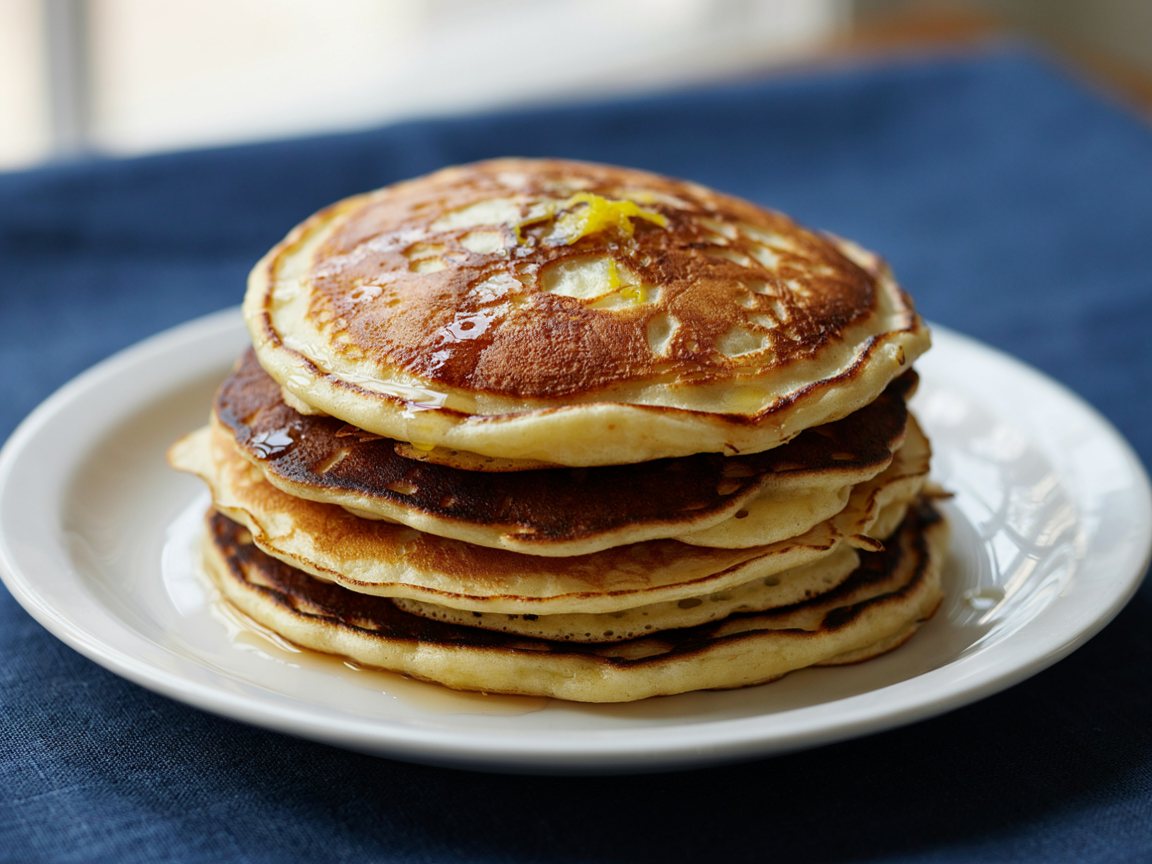
Tender, dense little pancakes cooked on the stovetop and finished with fresh lemon juice and zest. The lemon keeps them bright and light-tasting, and the eggs make them satisfyingly rich.
- Total
- 14 min
- Prep 6 · Cook 8
- Serves
- 1
- Difficulty
- Easy
You'll practice: Zesting · Whisking
- Sweet
- Stovetop
Instructions
-
Zest the lemon into a small bowl, then cut it in half and squeeze 1 tbsp of juice into a second small bowl. Set both aside.
~3 min
Zesting before juicing lets you remove only the yellow peel, since the white pith underneath is bitter.
Zesting Zest only the yellow peel, stopping before the bitter white pith; a fine grater or zester gives small, even pieces.
-
Melt 15 g butter in a non-stick skillet over low heat, then pour it into a mixing bowl and let it cool for 1 minute. Keep the skillet off the heat for now.
~1 min
Cooling the melted butter slightly prevents it from cooking the eggs when they are whisked in.
-
Whisk 2 eggs, 60 ml milk, 1 tbsp sugar, the pinch of salt and the lemon zest into the cooled butter until smooth. Add 60 g flour and whisk just until no dry streaks remain; the batter will be thick.
~3 min
Whisking just until no dry streaks remain keeps the gluten from overdeveloping, so the pancakes stay tender.
Whisking Whisk just until the flour disappears; overmixing develops gluten and makes the pancakes tough instead of tender.
-
Warm the skillet over low-medium heat. Spoon in 3 equal rounds of batter and cook until the edges look set and the undersides are golden, about 2 minutes.
~2 min
Cooking over low-medium heat lets the thick batter set through before the outside burns.
-
Flip the pancakes with a spatula and cook until golden on the second side and cooked through in the center, about 2 minutes more.
~2 min
Flipping once the edges look set and the underside is golden ensures the pancake holds together.
-
Slide the pancakes onto a plate and spoon the 1 tbsp lemon juice over them while still warm. Serve right away.
~1 min
The lemon juice goes on after cooking, not in the batter, so its brightness stays sharp instead of turning bitter.